Technology is transforming healthcare education, but not every innovation improves the way clinical skills are learned. As technology continues to reshape the way healthcare professionals learn, institutions are exploring new ways to make training more engaging, practical, and effective. Virtual Reality (VR), Augmented Reality (AR), Mixed Reality (MR), and simulation based learning are becoming increasingly common in medical colleges, nursing institutions, hospitals, and clinical simulation centres around the world. These technologies are opening up new possibilities for how learners build knowledge and develop clinical skills.
But introducing new technology into healthcare education is not simply about making learning more immersive. It is about ensuring that every tool genuinely helps learners become better prepared for real patient care.
This is especially important in resuscitation education. Performing CPR is more than remembering a sequence of steps. It requires learners to apply the right technique, make quick decisions under pressure, and perform with confidence when every second counts. These are skills that develop through practice, experience, and meaningful feedback.
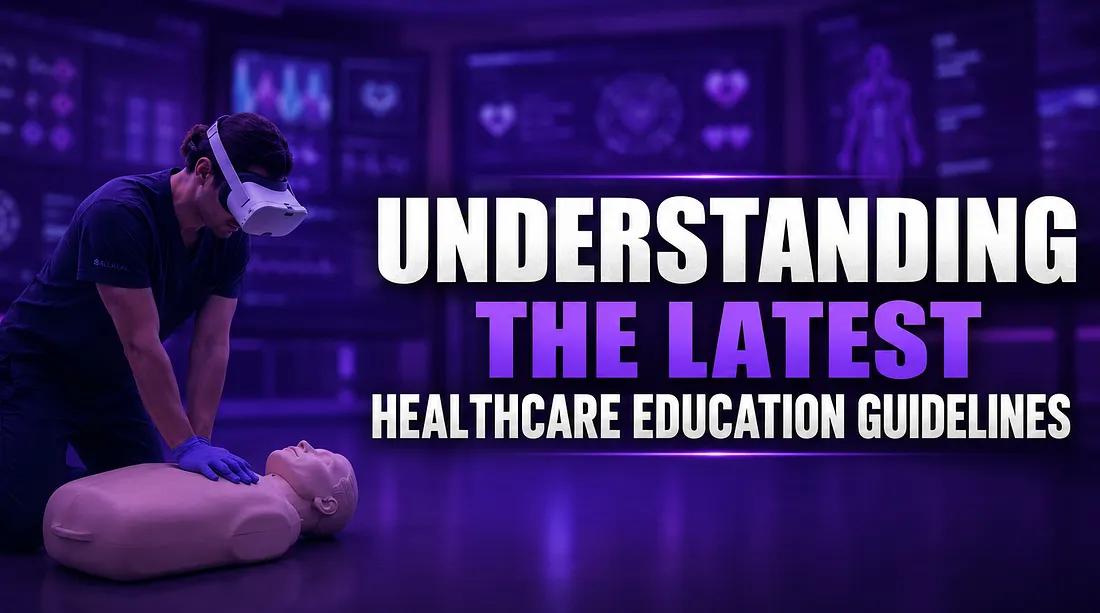
As immersive technologies become more widely adopted, educators are asking an important question.
How should Virtual Reality and Augmented Reality be used to improve healthcare education without compromising the development of practical clinical skills?
To help answer this, the 2025 American Heart Association Guidelines for Resuscitation Education Science, informed by evidence reviews from the International Liaison Committee on Resuscitation (ILCOR), introduced updated recommendations on the use of Virtual Reality and Augmented Reality in healthcare education. Rather than promoting or dismissing these technologies, the guidelines explain where they can add value, where their limitations exist, and how educators should think about using them to support effective learning. This marks an important shift in the conversation.
Source: American Heart Association Resuscitation Education Science Guidelines (2025)
https://cpr.heart.org/en/resuscitation-science/cpr-and-ecc-guidelines/resuscitation-education-science
The question is no longer whether immersive technology belongs in healthcare education. Instead, it is about understanding which technologies are best suited for different learning objectives. Some tools are highly effective for improving knowledge and learner engagement, while others may not provide the physical interaction needed to master hands on clinical skills.
For healthcare organizations investing in modern education, understanding these recommendations is becoming increasingly important. The goal is not simply to adopt new technology, but to choose solutions that combine innovation with evidence based learning and ultimately prepare healthcare professionals for real world clinical practice.
What Do the Latest Healthcare Education Guidelines Recommend?
The latest healthcare education recommendations make an important distinction between learning CPR and mastering CPR skills.
According to the recommendations:
- Virtual Reality may be considered to support knowledge acquisition during Basic Life Support (BLS) and Advanced Life Support (ALS) training.
- Augmented Reality may be considered to provide real time CPR feedback for both lay rescuers and healthcare professionals.
- Virtual Reality should not be used to teach CPR skills in lay rescuers and healthcare professionals.
At first glance, the third recommendation may seem surprising, especially given the growing interest in immersive learning technologies. However, the recommendation is not a rejection of Virtual Reality itself. Instead, it reflects what current evidence tells us about how different technologies support different types of learning.
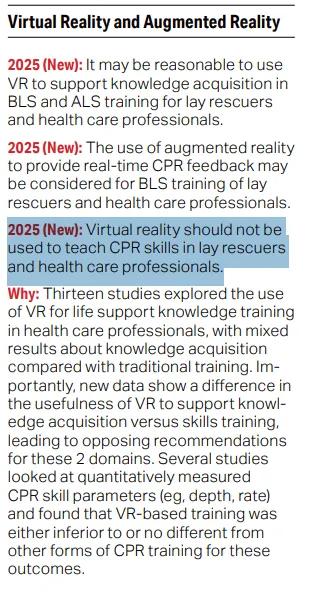
The guideline explains that thirteen studies evaluated the use of Virtual Reality for life support education. While several studies found that VR could support knowledge acquisition, the evidence showed different results when learners were assessed on physical CPR skills such as compression depth and compression rate. Across these studies, VR based training was either inferior to or showed no significant difference from other CPR training methods for these practical skill outcomes.
This distinction is important because healthcare education involves more than remembering clinical steps. It also requires learners to develop the physical ability to perform those skills consistently in real world situations.
Why Physical Skills Require More Than Virtual Learning
The recommendations highlight an important aspect of healthcare education that is often overlooked. Not every clinical skill is learned in the same way.
Understanding the steps of a procedure and physically performing that procedure are two very different learning outcomes. A learner may know the correct CPR sequence, understand the recommended compression rate, and recognize when chest compressions should begin. However, translating that knowledge into consistent, high-quality CPR requires repeated physical practice.
This is because CPR is classified as a psychomotor skill, a skill that combines cognitive understanding with physical movement, coordination, timing, and muscle memory. Unlike knowledge based learning, psychomotor skills develop through repetition, tactile feedback, and hands on experience.
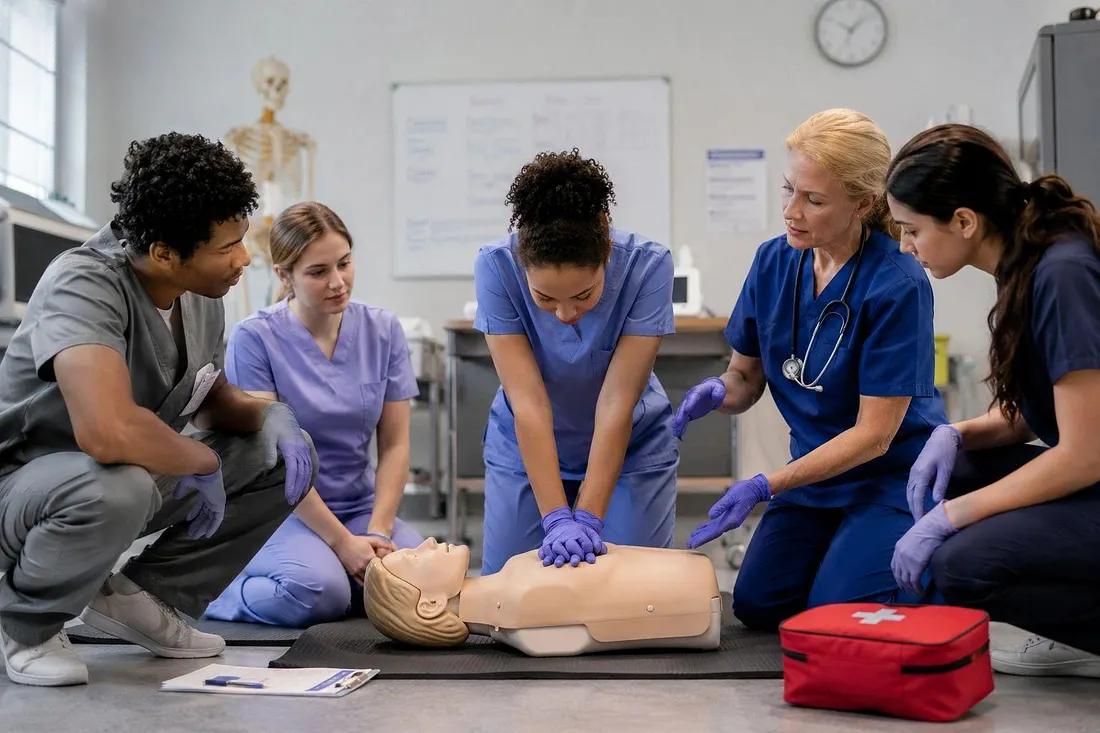
During CPR, learners must apply the correct amount of force, maintain an appropriate compression rhythm, achieve the recommended compression depth, allow complete chest recoil, and continue performing consistently throughout the resuscitation effort. These are physical actions that cannot be mastered by observation alone.
This helps explain why the latest healthcare education guidelines differentiate between using Virtual Reality for knowledge acquisition and using it to teach CPR skills. While immersive digital environments can improve engagement and reinforce clinical concepts, developing practical competency still depends on meaningful interaction with the physical task itself.
For healthcare educators, this distinction is becoming increasingly important. As simulation technologies continue to evolve, the focus is shifting from simply making training more immersive to ensuring that learners gain both the knowledge and the practical experience required to perform confidently in real clinical situations.
How Modern Simulation Bridges This Gap
Recognizing that effective clinical education requires both knowledge and hands on practice, healthcare institutions are increasingly adopting simulation based learning to strengthen skill development. Unlike traditional training methods that often separate theory from practice, modern simulation creates realistic learning environments where learners can apply their knowledge while performing clinical procedures in real time.
In resuscitation education, this means moving beyond simply teaching the sequence of CPR. Learners are placed in scenarios that encourage them to assess the situation, make timely decisions, and perform chest compressions while responding to changing clinical conditions. This combination of cognitive learning and physical practice helps create a more authentic learning experience that better reflects the realities of patient care.
Advances in simulation technology have further expanded these possibilities. Today’s simulation environments can integrate digital guidance, realistic patient scenarios, objective performance measurement, and instructor feedback into a single learning experience. Rather than relying solely on subjective observation, educators can use measurable data to evaluate learner performance, identify areas for improvement, and monitor progress over time.
This shift reflects a broader trend in healthcare education. The focus is no longer limited to completing a training session. Instead, institutions are placing greater emphasis on developing clinical competency through repeated practice, meaningful feedback, and evidence based assessment. Modern simulation supports this approach by allowing learners to build confidence while giving educators the tools to evaluate whether critical skills are being performed correctly.
As immersive technologies continue to evolve, the goal is not to replace physical practice but to enhance it. When thoughtfully integrated into simulation based education, these technologies can create learning experiences that are both engaging and grounded in the practical demands of real world healthcare.
How ALLREAL’s Approach Aligns with Current Evidence
The latest healthcare education recommendations reinforce an important principle: immersive technology should enhance learning without compromising the development of practical clinical skills. While Virtual Reality offers valuable opportunities for knowledge acquisition, current evidence suggests that physical skill mastery still depends on hands on practice and meaningful interaction with real training equipment.
This is the philosophy behind ALLREAL’s RescueSim platform.
Rather than replacing physical practice with a fully virtual environment, RescueSim combines Mixed Reality technology, high fidelity smart CPR manikins, and real time performance analytics to create an immersive learning experience while preserving the tactile feedback required for psychomotor skill development.
With RescueSim XR, learners perform CPR on a physical manikin while interacting with realistic Mixed Reality scenarios. Instead of practicing in a completely virtual world, they remain connected to the physical task, allowing them to develop essential skills such as correct hand placement, compression depth, compression rate, and chest recoil while receiving immersive visual guidance throughout the training experience.
For institutions seeking a classroom based solution, RescueSim Lite extends this approach through a smart connected CPR manikin and an intuitive desktop application. The platform captures objective performance metrics during every training session, enabling instructors to assess learner competency, identify skill gaps, and monitor progress over time using measurable performance data.
This approach reflects the broader direction of modern healthcare education. As institutions increasingly focus on competency based learning, simulation technologies are evolving beyond creating immersive experiences alone. They are helping educators deliver structured practice, objective assessment, and continuous feedback, ensuring that learners not only understand clinical procedures but also develop the practical skills required to perform them with confidence.
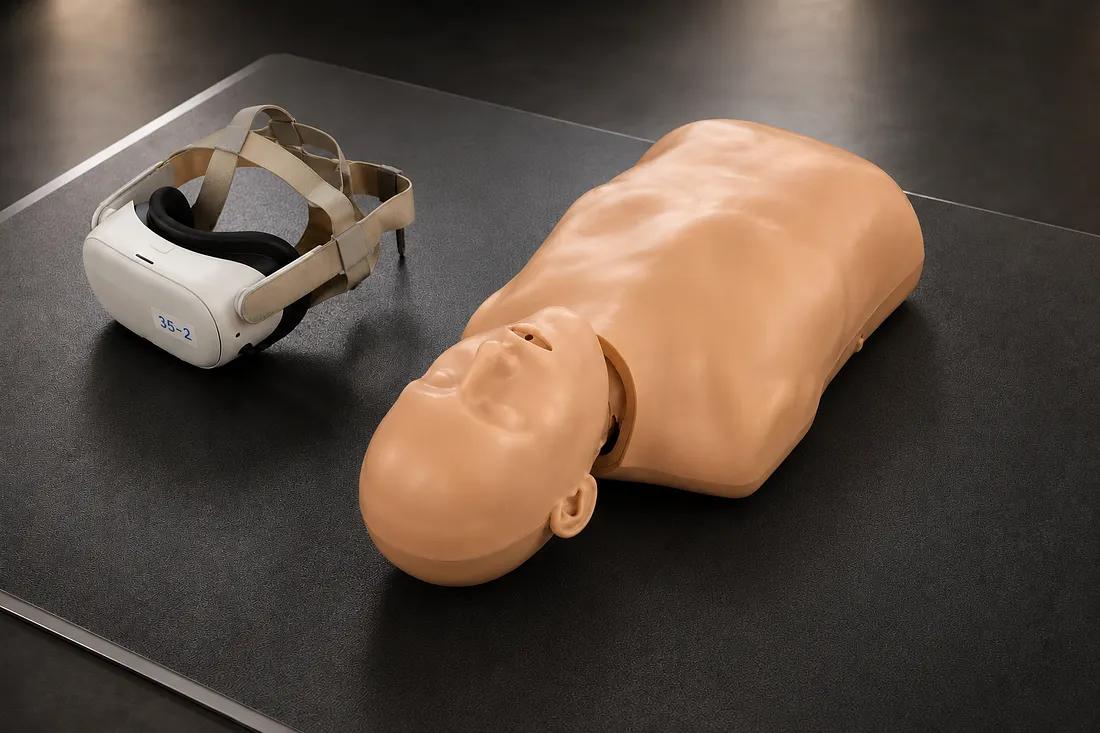
By combining physical simulation with immersive digital guidance and performance analytics, ALLREAL’s RescueSim platform aligns with the growing emphasis on evidence based, competency focused healthcare education while addressing many of the challenges highlighted in the latest resuscitation education guidelines.
Conclusion
Healthcare education is entering a new phase where technology is no longer evaluated simply by how immersive it is, but by how effectively it helps learners develop real clinical competency. The latest healthcare education guidelines reinforce an important message: immersive technologies have an increasingly valuable role to play, but they must be applied in ways that support the learning objectives they are intended to achieve.
For CPR education, this means balancing digital innovation with hands on practice. While Virtual Reality can enhance knowledge acquisition and learner engagement, developing high quality CPR skills still depends on meaningful physical interaction, repeated practice, and objective feedback.
As simulation technologies continue to evolve, the future of healthcare education lies in combining these strengths rather than choosing one approach over another. By integrating immersive digital experiences with physical simulation and measurable performance assessment, healthcare institutions can create learning environments that are not only engaging but also grounded in evidence based educational principles.
This is the direction ALLREAL has embraced through the RescueSim platform. By combining Mixed Reality, smart connected CPR manikins, and real time performance analytics, RescueSim supports a more comprehensive approach to CPR education, one that helps learners build confidence, enables educators to measure competency, and aligns with the evolving expectations of modern healthcare training.
As hospitals, medical colleges, nursing institutions, and simulation centres continue to modernize their training programs, the focus should remain on one fundamental goal: preparing healthcare professionals with the knowledge, practical skills, and confidence to respond effectively when every second matters.
Call to Action
Interested in exploring the future of simulation based healthcare education?
Discover how ALLREAL’s RescueSim XR and RescueSim Lite are helping institutions deliver immersive, measurable, and competency focused CPR training.