CPR training has always been about preparing people to save lives. Today, the question is whether training itself is keeping up.
A cardiac emergency leaves very little room for hesitation. In those critical first few minutes, the quality of CPR can directly influence patient outcomes. That reality is why CPR training has remained one of the most important components of healthcare education for decades.
But healthcare has changed.
Hospitals are investing in simulation centres. Medical colleges are expanding skills labs. Digital technologies are transforming the way clinical competencies are taught, assessed, and maintained. Across healthcare, there is a growing expectation that training should do more than deliver knowledge. It should demonstrate measurable competence.
CPR education is beginning to follow the same path.
For years, traditional instructor led training has successfully introduced learners to the fundamentals of cardiopulmonary resuscitation. It has helped generations of healthcare professionals, nursing students, emergency responders, and workplace safety teams understand the importance of acting quickly during a cardiac emergency.
Yet today's healthcare environment demands more than understanding the correct sequence of steps.
Healthcare organizations want to know whether learners can perform under pressure. Training managers want objective ways to measure competency. Educators are looking for better methods to track progress and identify skill gaps before learners enter real clinical environments.
The conversation is shifting toward preparedness, consistency, and measurable performance.
For organizations reviewing their existing training programs, the challenge is not deciding whether CPR training is important. The challenge is understanding whether the current approach is delivering the level of readiness modern healthcare expects. The answer often becomes clearer when you look beyond attendance records and certifications.
Here are seven signs that your CPR training program may be ready for its next evolution.
I wouldn't call it an "upgrade" just because new technology exists. I would call it an upgrade because expectations have changed. That's what makes the difference.
1. Your Training Measures Participation More Than Performance
Every learner can complete a CPR session. Not every learner performs CPR with the same level of confidence, consistency, or accuracy. Many training programs still focus primarily on attendance and successful course completion. While those remain important milestones, they don't always answer a more meaningful question:
How well did the learner actually perform?
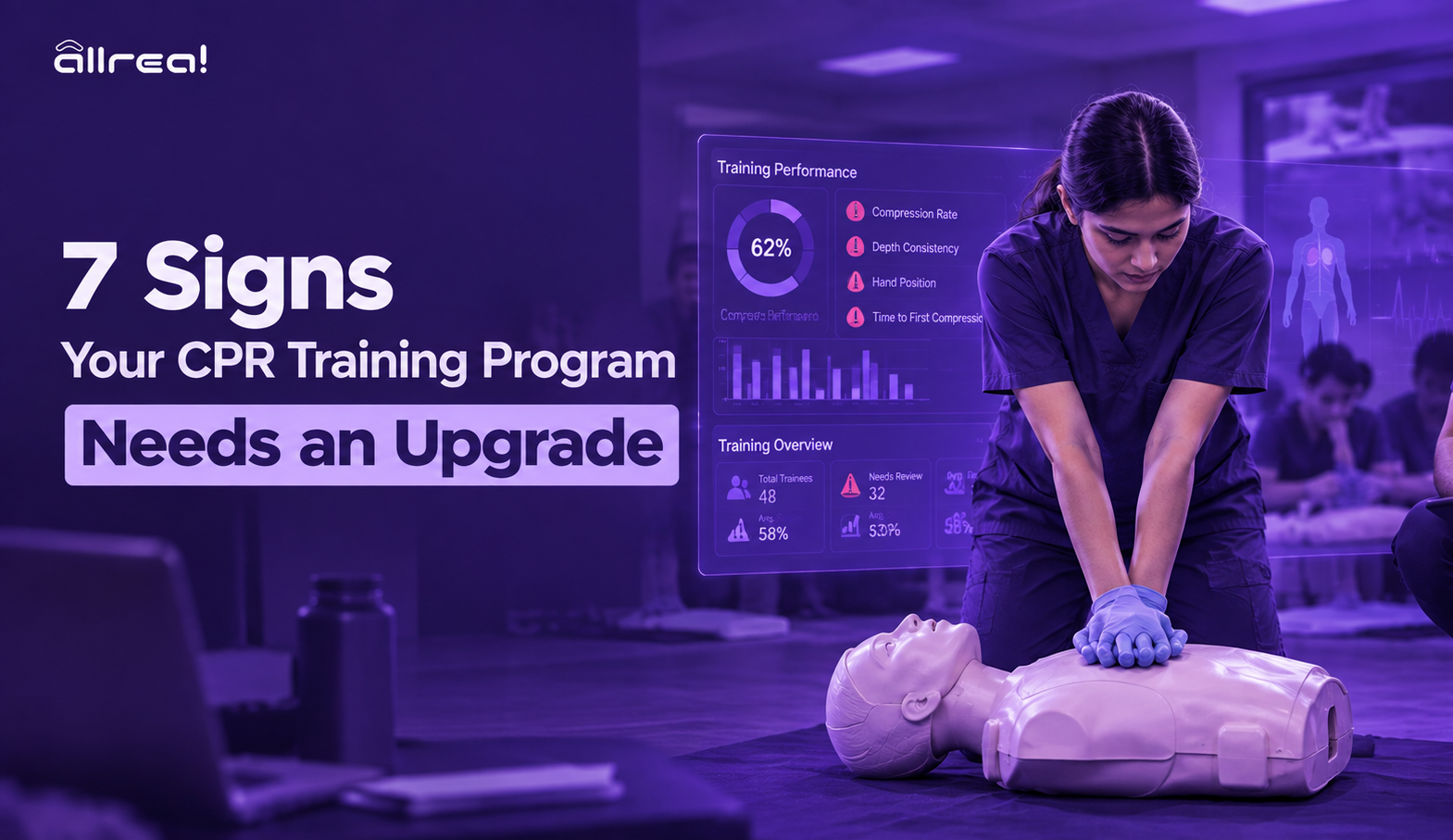
Compression depth, compression rate, chest recoil, hand placement, and time to first action all influence the quality of CPR. Yet without objective performance measurement, evaluating these elements often depends on observation alone.
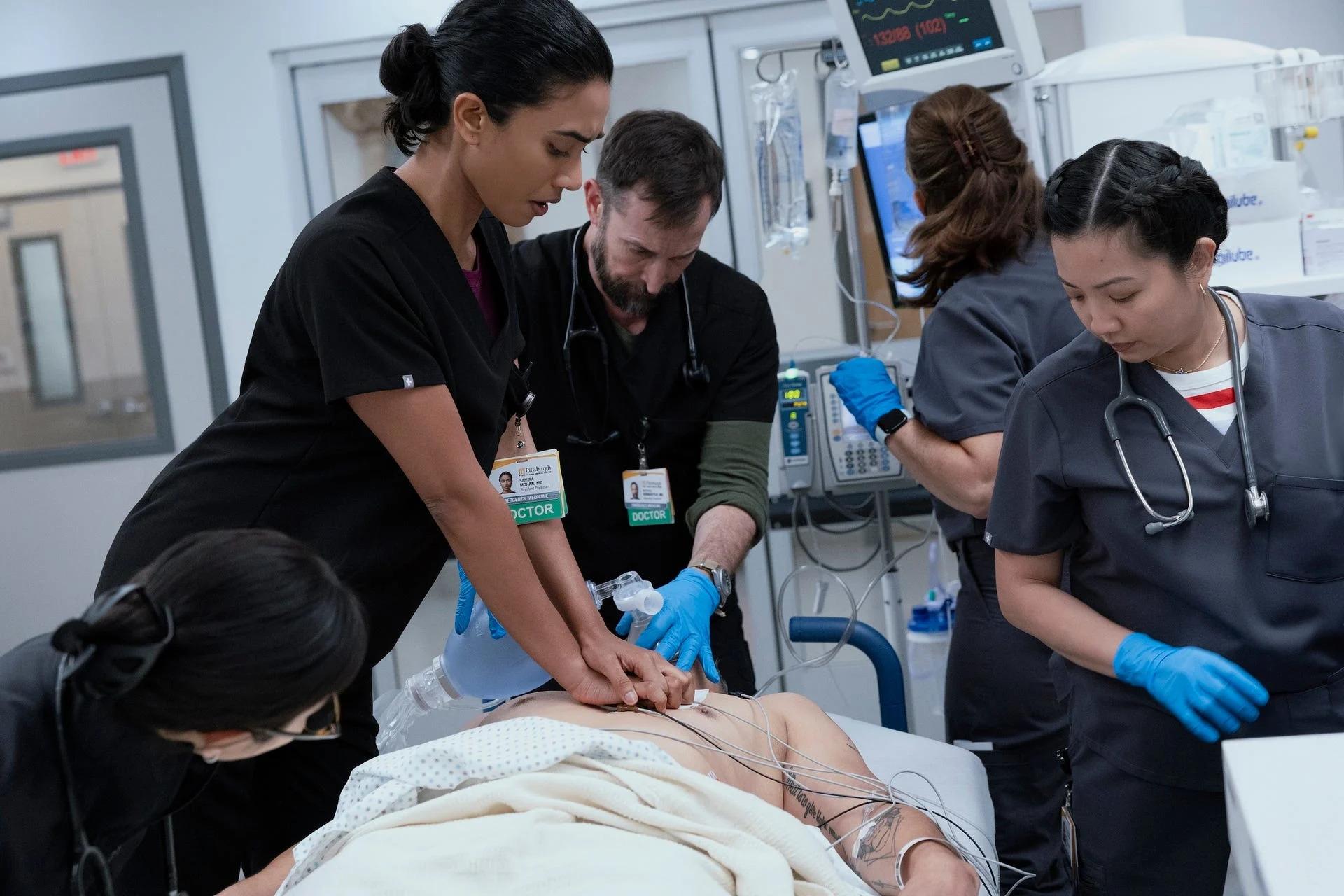
As healthcare increasingly adopts data driven approaches to education, organizations are beginning to expect the same level of measurable insight from CPR training.
2. Learners Leave Training Without Knowing How Well They Performed
Every CPR training session is an opportunity to improve. But improvement begins with understanding performance.
In many traditional training environments, learners complete a practical session, receive verbal feedback from an instructor, and move on to the next exercise. While this guidance is valuable, it doesn't always provide a complete picture of how well the learner performed.
Questions such as Were the chest compressions deep enough? Was the compression rate maintained consistently? or Did the learner achieve complete chest recoil? are often difficult to answer without objective measurement.
For learners, this can make it challenging to identify areas that need improvement. For trainers, it can become equally difficult to deliver consistent feedback across larger groups.
As healthcare education continues to evolve, there is a growing emphasis on providing measurable feedback that helps learners understand their strengths, recognize areas for improvement, and build confidence with every training session.
3. Training Doesn't Reflect the Reality of an Emergency
A classroom is designed for learning. A cardiac emergency is anything but predictable.
Healthcare professionals rarely perform CPR in quiet, controlled environments. Emergencies demand quick thinking, effective communication, and the ability to stay focused under pressure while delivering high quality compressions.
These are skills that develop through experience.
This is why simulation based learning has become an increasingly important part of healthcare education. By recreating realistic emergency scenarios, simulation allows learners to apply their knowledge in situations that closely resemble real clinical practice. Rather than simply memorizing the CPR sequence, learners begin to develop decision making skills, situational awareness, teamwork, and the confidence to respond when every second matters.
The goal is not to make training more difficult. It is to make it more meaningful.
4. Progress Isn't Being Measured Over Time
CPR competency isn't built in a single training session. Like any clinical skill, it improves through repetition, practice, and continuous feedback. Yet many organizations have limited visibility into how learners develop over weeks, months, or even years.
Has a learner improved since their previous assessment?
Are the same mistakes being repeated?
Which learners need additional coaching before their next certification or clinical placement?
Without reliable performance data, answering these questions often depends on manual records or instructor observations. Tracking progress over time gives educators a clearer understanding of learner development while helping organizations build more consistent and effective training programs. It also supports a broader shift in healthcare education, in which competency is measured by demonstrated performance rather than participation alone.
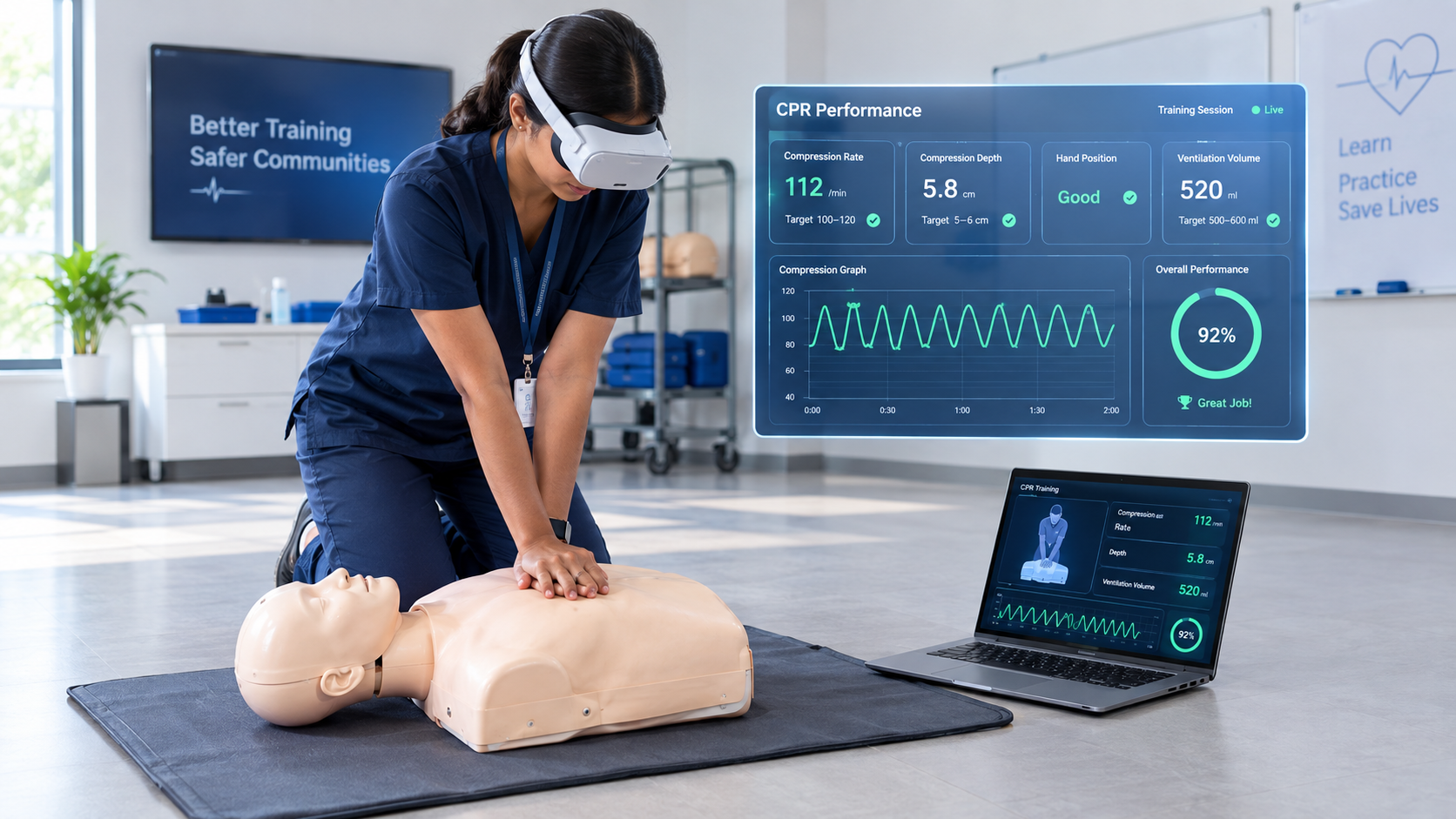
5. Instructors Spend More Time Assessing Than Teaching
Great CPR training has always depended on experienced instructors. Their ability to demonstrate techniques, correct mistakes, and share real-world experiences is something technology can never replace.
However, as training programs expand and class sizes grow, instructors face a different challenge. Instead of focusing entirely on coaching learners, much of their attention is divided between observing multiple participants, evaluating individual performance, recording assessments, and ensuring everyone receives adequate feedback.
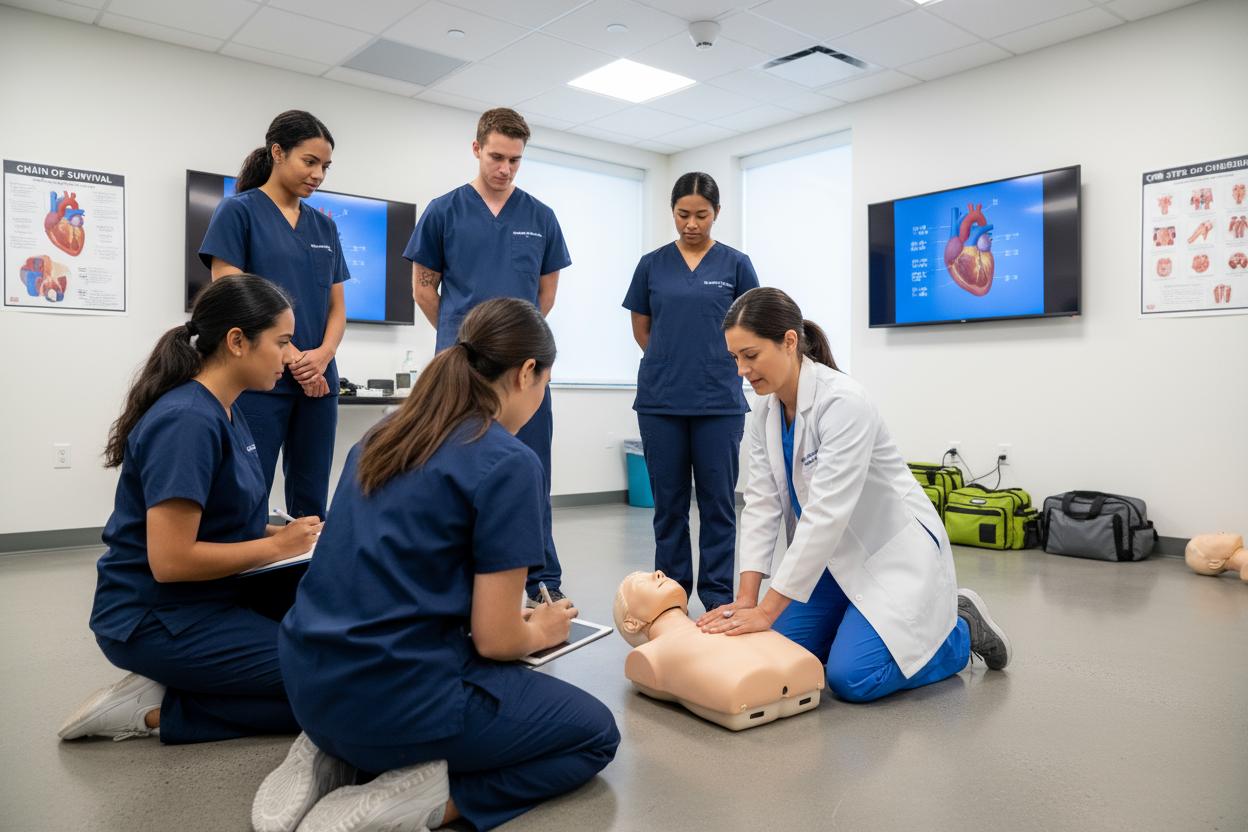
This can become even more demanding in group training sessions, where several learners are practicing at the same time. Modern CPR education is beginning to address this challenge by supporting instructors with technologies that automate performance measurement while allowing them to focus on what they do best teaching, mentoring, and developing confident responders.
When instructors spend less time documenting performance and more time guiding learners, the quality of training naturally improves.
6. Your Training Program Isn't Using Data to Improve Learning
Healthcare today runs on data.
From patient outcomes and quality improvement initiatives to clinical audits and operational decisions, measurable information plays a vital role in improving healthcare delivery.
Training should be no different.
Yet many CPR programs still have limited visibility into learner performance beyond the classroom. Without reliable data, it becomes difficult to identify common skill gaps, measure improvements across different groups, or evaluate the effectiveness of the training itself. Objective performance data provides a much clearer picture.
It helps educators understand where learners consistently struggle, enables more targeted coaching, and supports continuous improvement across the entire training program. More importantly, it shifts the focus from completing a course to developing real competency.
As healthcare education continues to embrace evidence based learning, performance analytics are becoming an essential part of preparing learners for real emergencies.
7. Your CPR Training Hasn't Evolved with Healthcare
Healthcare is constantly evolving. Clinical practices continue to advance. New technologies are changing the way healthcare professionals learn, collaborate, and deliver patient care. Simulation has become an integral part of medical education, allowing learners to practice complex procedures in safe and controlled environments before applying those skills in real clinical settings.
CPR training is also beginning to move in this direction.
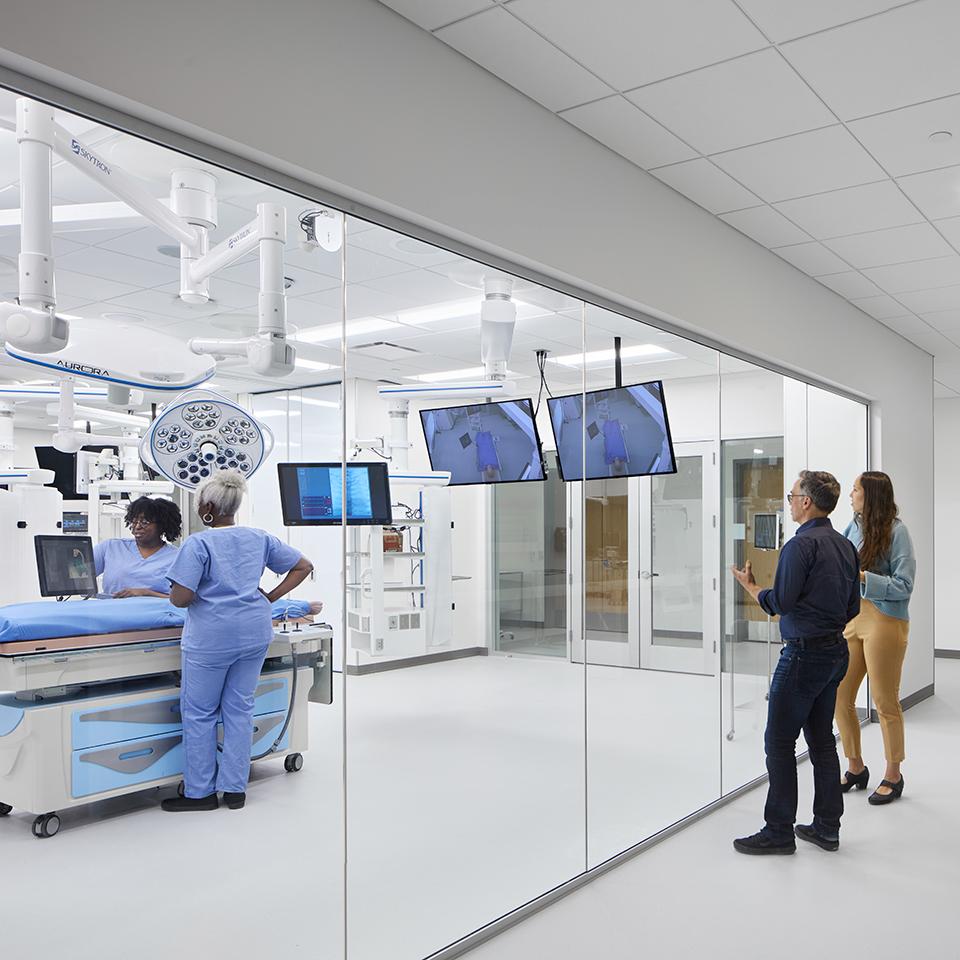
The goal is no longer simply to teach learners the correct sequence of steps. It is to create learning experiences that are realistic, measurable, and focused on building confidence through practice.
This doesn't mean replacing traditional CPR education. It means strengthening it.
By combining experienced instruction with immersive simulation and objective performance assessment, organizations can create training environments that better reflect the realities of emergency response while giving learners meaningful feedback throughout their learning journey.
As expectations for healthcare education continue to rise, adopting smarter training methods is becoming less about keeping up with technology and more about preparing people to perform when it matters most.
Looking Beyond Traditional CPR Training
Recognizing these challenges, many healthcare organizations are exploring new approaches that make CPR training more immersive, measurable, and learner-focused. This is where technology is beginning to play a transformative role.
Instead of relying solely on observation, modern CPR training solutions combine realistic simulation with objective performance analytics, enabling learners to understand exactly how they performed while giving educators meaningful insights into competency and progress.
One example is RescueSim, powered by ALLREAL, which has been developed to complement traditional CPR education rather than replace it. By combining immersive simulation, smart connected CPR manikins, and real-time performance analytics, RescueSim helps create training experiences that are more engaging, measurable, and aligned with the evolving needs of healthcare education.
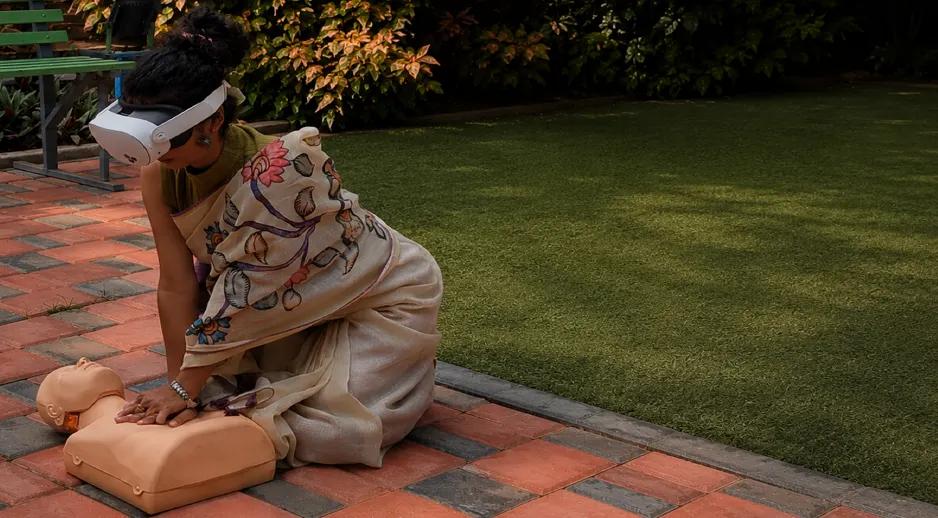
Whether through RescueSim XR, which places learners in realistic Mixed Reality emergency scenarios, or RescueSim Lite, which provides objective CPR assessment and classroom performance monitoring, the focus remains the same: helping learners build confidence while enabling educators to make better-informed training decisions.
Final Thoughts
The role of CPR training has never been more important.
As expectations around healthcare education continue to evolve, organizations are looking beyond attendance records and course completion. The focus is shifting toward building confidence, improving competency, and ensuring learners are prepared to respond effectively when every second counts.
Upgrading a CPR training program isn't simply about introducing new technology. It's about creating learning experiences that are more realistic, measurable, and aligned with the demands of modern healthcare. For hospitals, medical colleges, nursing institutions, simulation centres, CPR training providers, ambulance services, and workplace safety teams, investing in better training means investing in better preparedness.
Because when a cardiac emergency happens, the quality of the response depends on the quality of the training that came before it.
Discover a Smarter Approach to CPR Training
Whether you're modernizing an existing simulation lab, strengthening emergency response education, or exploring innovative ways to improve CPR competency, RescueSim XR and RescueSim Lite provide a flexible and measurable approach to training.
Explore how ALLREAL is helping shape the future of CPR education through immersive simulation, smart CPR technology, and real-time performance analytics.