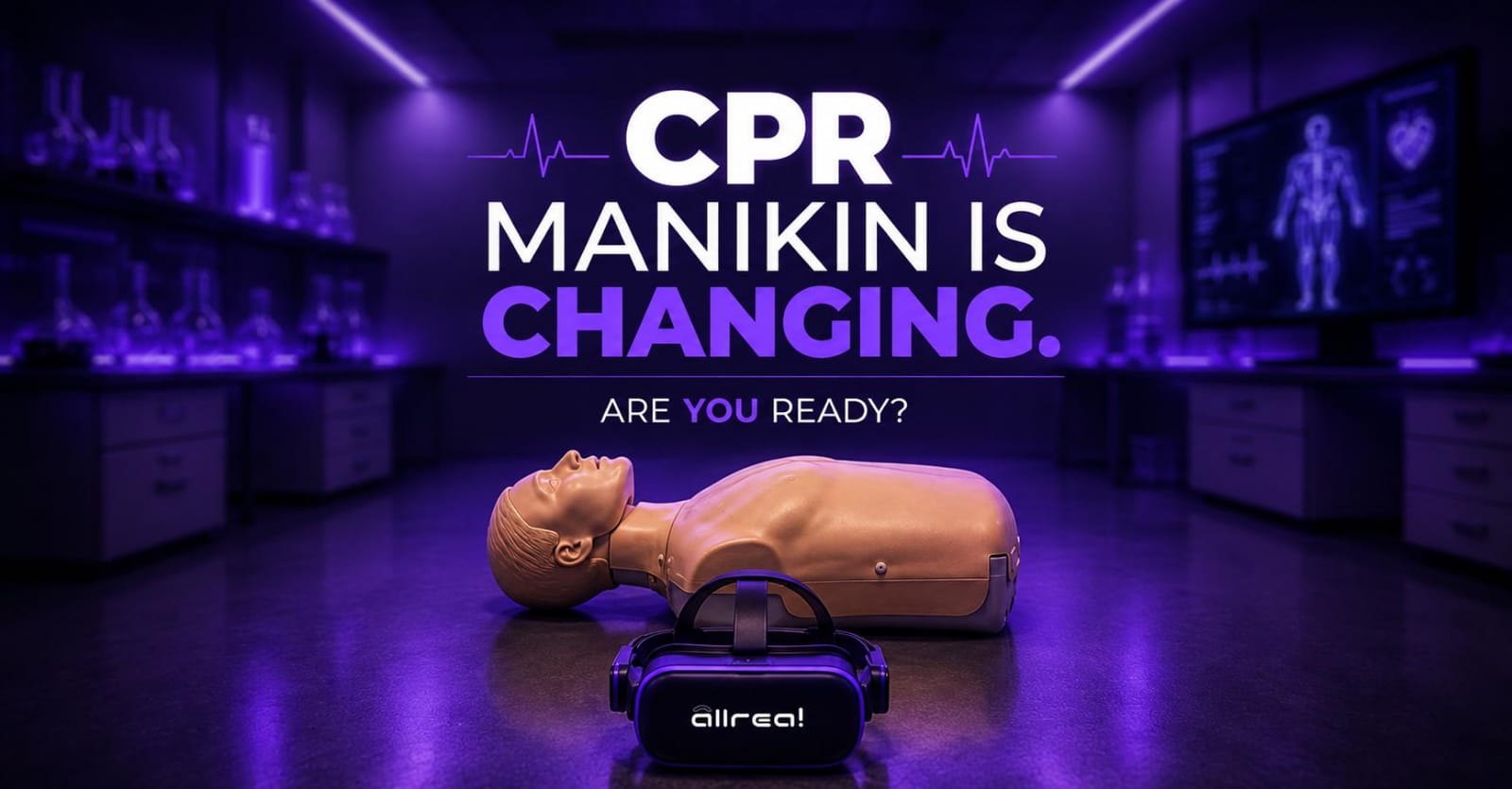
For years, the CPR manikin has played a straightforward role in healthcare education. A learner kneels beside it, performs chest compressions, receives guidance from an instructor, and moves on to the next skill. But CPR training is changing, and the equipment used to deliver that training needs to change with it.
A modern CPR manikin can be more than a physical model for practising compressions. With sensors, feedback technology and connected systems, it can help capture performance data, provide immediate guidance and give instructors a clearer view of how learners are performing.
That shift matters because CPR quality is not always easy to judge through observation alone. The 2025 American Heart Association for CPR and Emergency Cardiovascular Care recommend the use of CPR feedback devices during training for both healthcare professionals and lay rescuers. The guidelines highlight the limitations of visual assessment and the value of objective, real-time feedback during practice.
Recent evidence supports this direction. A 2025 systematic review conducted as part of the International Liaison Committee on Resuscitation's continuous evidence evaluation examined 20 randomized controlled trials involving 4,579 participants. The review found that feedback devices improved several measures of CPR performance, including compression depth, rate and recoil compliance. However, the researchers also noted that there is still insufficient evidence showing whether these improvements directly translate into better patient outcomes.
The distinction is important.
The goal of modern CPR training equipment should not simply be to make practice more realistic or collect more data. It should help learners practise correctly, understand their performance, receive meaningful feedback and give instructors information they can use to improve training.
This changes the role of the CPR manikin itself.
Instead of being only a physical representation of a patient, the manikin can become a connected part of the learning environment, one that supports measurement, feedback and more informed instruction. And that is where the modern CPR manikin begins to look very different from the traditional one.
From Basic Manikins to Smart CPR Manikins
The biggest change in CPR training equipment is not necessarily how realistic a manikin looks. It is what the manikin can measure, communicate and help instructors understand.
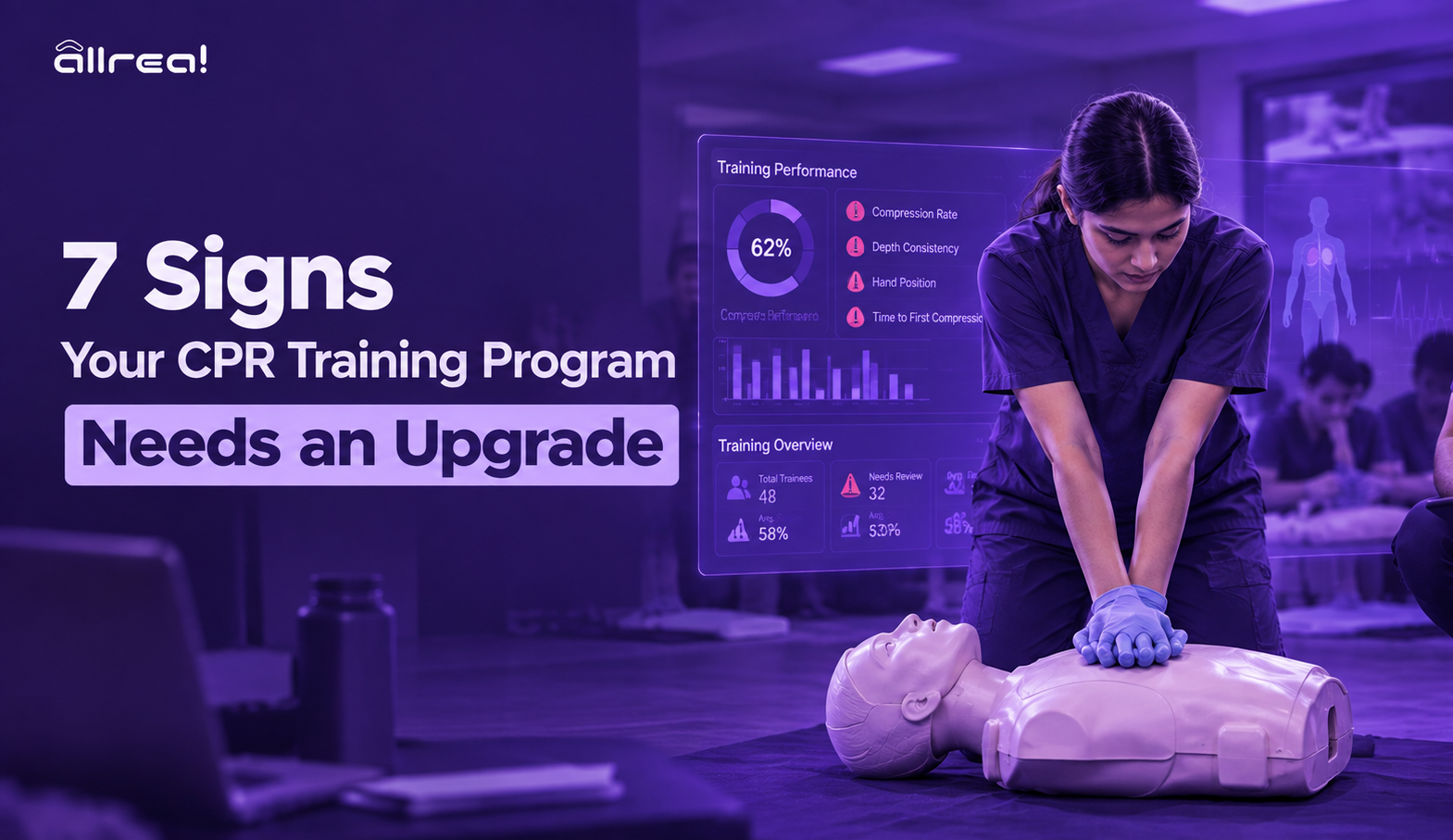
A traditional manikin can provide the physical resistance needed to practise chest compressions, but much of the assessment still depends on what an instructor can observe during a training session. A smart CPR manikin adds another layer by using sensors and connected technology to capture performance as it happens.
Depending on the system, this can include measurements such as compression depth, compression rate, recoil and consistency. Instead of waiting until the end of a session to hear that something needs improvement, learners can receive information while they are practising.
That immediate feedback can make a difference in how learners understand their own performance.
For example, a learner may believe their compressions are deep enough because they are maintaining a steady rhythm. A connected manikin can reveal whether the depth is actually within the desired range. Similarly, inconsistent recoil may be difficult to recognise through observation alone but can become much more apparent when the system records and displays it.
The important part is not simply collecting these measurements. The data needs to be understandable and useful. For learners, that could mean clear feedback that helps them recognise and correct a technique issue during practice. For instructors, it could mean having access to performance information that supports more targeted coaching rather than relying entirely on general observation. This also changes what happens after a training session.
Instead of a learner simply completing a practice scenario and moving on, performance data can potentially be used to identify recurring weaknesses, monitor improvement across sessions and create a clearer picture of individual progress.In this sense, a smart CPR manikin becomes more than a device that responds to compressions. It becomes a measurement and feedback tool within the training environment.
However, smarter equipment does not automatically mean better training. A system can generate large amounts of data without making the learning experience more effective. The real value comes from turning performance data into information that learners and instructors can understand and act on.
That is the difference between simply adding technology to a CPR manikin and genuinely improving the training experience.
From Feedback to Measurable Training
Real-time feedback is useful during practice, but modern healthcare training equipment can go a step further. The bigger opportunity is to turn individual practice sessions into measurable training experiences.
In a traditional classroom, an instructor may observe several learners performing CPR and provide corrections as they go. But when multiple people are practising at the same time, it can be difficult to notice every performance issue or remember how each learner performed across different sessions.
Connected training equipment can help address this challenge by making performance information easier to capture and review.
Instead of relying only on observations such as “your compressions need to be deeper,” instructors can have access to recorded performance data that shows where a learner is struggling. This can help identify patterns that may not be obvious during a single practice session.
For example, a learner might perform well during the first few compressions but become inconsistent as the scenario continues. Another learner may maintain an appropriate rate but repeatedly struggle with compression depth. These are different performance problems, and they may require different approaches from the instructor.
Measurement makes those differences easier to identify.
It can also support progress tracking. When performance information is available across multiple sessions, instructors can see whether a learner is improving, maintaining their performance or continuing to struggle with a particular aspect of CPR. This creates an important shift in the training process.
Rather than treating each practice session as an isolated activity, training can become a continuous cycle:
Practise → Measure → Identify → Correct → Practise Again
The purpose is not to turn CPR education into a collection of scores. Numbers only become valuable when they help answer practical questions: What does the learner need to improve? Has the correction worked? Where should the instructor focus next?
For healthcare institutions, this can also provide a clearer view of training quality at a broader level. When performance data is captured consistently, training teams may be able to understand common skill gaps across groups rather than relying entirely on individual observations. This is where connected CPR equipment begins to move beyond simple feedback.
The manikin is no longer only helping someone practise a skill. It can become part of a training system that measures performance, supports correction and makes progress easier to understand.
And once multiple training devices can communicate with the same system, the possibilities extend beyond individual practice.
When CPR Training Equipment Becomes Connected
The next step in the evolution of CPR training equipment is connectivity.
A single smart manikin can provide useful information about one learner's performance. But in a classroom, simulation centre or healthcare institution, instructors may be working with several learners at the same time. Managing performance across multiple devices introduces a different challenge: how can all that information be brought together in a way that is actually useful?
Connected training systems can make this possible.
Instead of each manikin functioning as a standalone device, multiple training units can communicate with a central application or dashboard. This allows instructors to view performance information across learners without having to move between different devices or rely entirely on manual observation.
The benefit is not simply convenience.
A connected system can create a more consistent training environment. Instructors can monitor performance, identify learners who may need additional attention and review results after a session. Training teams can also gain a broader understanding of how a group is performing rather than looking at individual practice in isolation.
This becomes particularly valuable when CPR training needs to be delivered at scale. Hospitals, universities, training institutes and organisations may have many learners who need to practise the same skills. A connected approach can help instructors manage those sessions while maintaining visibility into individual performance. It can also make the training process more organised.
Instead of performance information remaining with the instructor's memory or being recorded manually, digital systems can potentially store and present relevant data in a structured format. This creates an opportunity to compare performance between sessions, recognise recurring skill gaps and understand whether training interventions are having the intended effect. But connectivity alone is not the goal.
A dashboard filled with numbers does not automatically create better training. The system needs to present information in a way that is clear, relevant and actionable. Instructors should be able to understand what matters without having to interpret complicated data during a live training session.
The best connected CPR systems therefore bring several elements together:
Physical practice. Measurement. Feedback. Data. Instructor insight.
When these elements work together, the manikin becomes part of a larger training ecosystem rather than an isolated piece of equipment. And this raises an important question for healthcare organisations: what should they actually expect from modern CPR training equipment?
Where RescueSim Fits Into the Evolution of CPR Training
The evolution of CPR training equipment is already moving in this direction. RescueSim by allreal brings together the ideas discussed so far which is connected practice, measurable performance, feedback and digital training technology through two different training approaches.
RescueSim Lite: Making CPR Practice More Measurable
RescueSim Lite combines a smart connected CPR manikin with a desktop application to make CPR practice more measurable. Instead of treating the manikin as a standalone practice tool, the system connects the physical training activity with digital performance information. Learners can practise CPR while their performance is captured, allowing instructors to review key aspects of technique and provide more informed guidance.
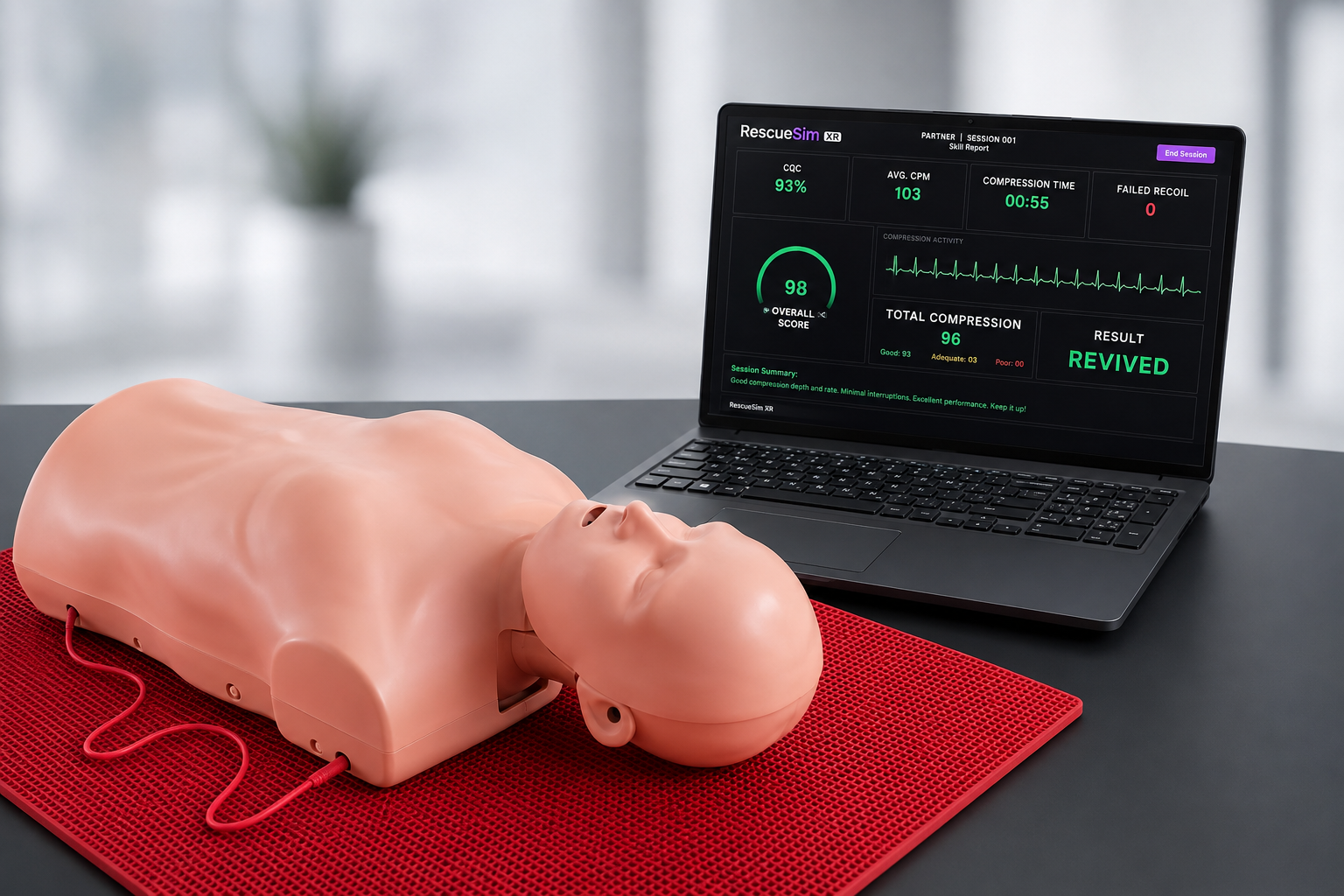
The system is also designed for classroom environments, where multiple manikins can be connected to support training sessions involving several learners. This approach addresses a practical challenge in CPR education: how to make hands-on practice measurable without making the training process unnecessarily complicated.
RescueSim XR: Bringing CPR Into Immersive Scenarios
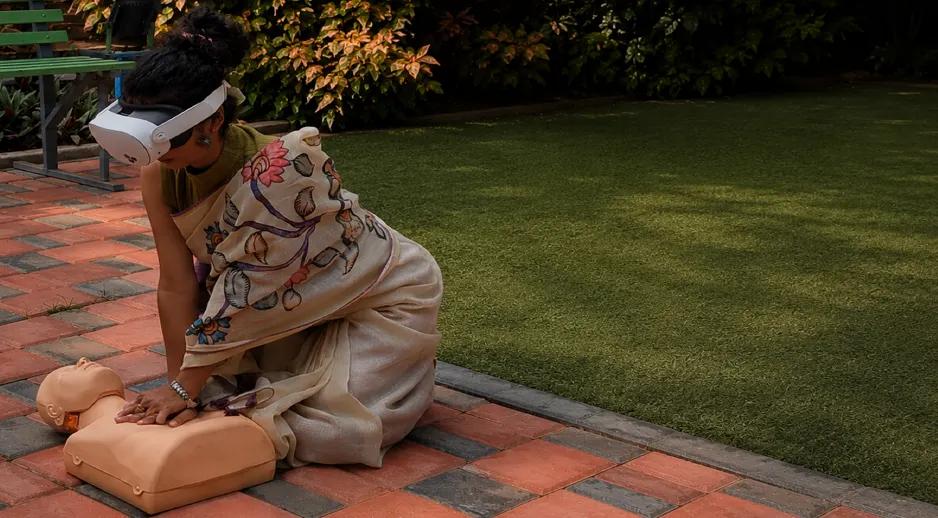
RescueSim XR takes the concept further by combining the smart CPR manikin with mixed reality. Rather than practising compressions in isolation, learners can be placed within simulated emergency scenarios where CPR becomes part of a larger response. The physical actions performed on the manikin can be connected with the virtual environment, creating a more immersive training experience.
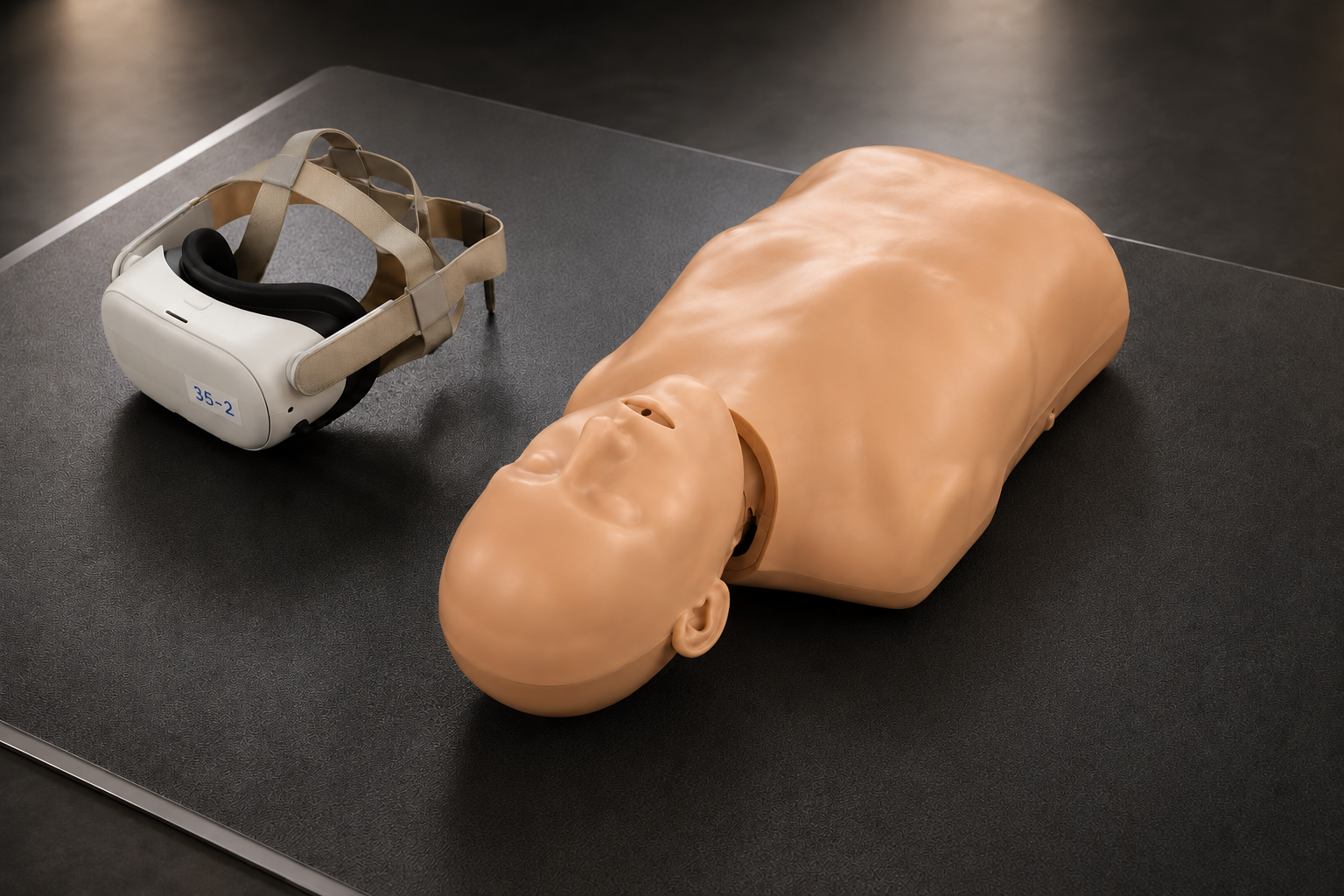
This matters because real emergencies rarely happen in a controlled training room. Responders may need to recognise a situation, begin appropriate actions, work with others and continue performing effectively while the scenario develops around them. By combining physical CPR practice with immersive simulation and performance analytics, RescueSim XR is designed to make that training experience more contextual.
The two systems therefore approach the same broader challenge from different directions.
RescueSim Lite focuses on connected and measurable CPR practice. RescueSim XR adds immersive, scenario-based simulation to that foundation.
Both reflect a larger shift in healthcare training: moving away from equipment that simply allows learners to practise a skill and toward systems that can help organisations measure performance, understand training gaps and build greater confidence in readiness.
But measuring performance is only part of the challenge.
The more important question is what those measurements can tell an organisation about whether its people are actually prepared to respond when the situation is no longer a practice session.
Beyond the Manikin: Training the Complete Response
CPR rarely happens as an isolated skill. During a real emergency, responders need to recognise the situation, begin CPR, communicate with others and maintain performance as the situation develops. Traditional manikins are useful for practising chest compressions, but they cannot recreate the wider context of an emergency on their own. This is where simulation technology can add another layer to CPR training.
With RescueSim XR, the smart manikin becomes part of a mixed reality scenario. Instead of simply practising compressions, learners can perform CPR within a simulated emergency environment, connecting physical skills with situational awareness and response.
The goal is not to replace traditional hands-on practice. It is to make that practice more meaningful by placing the skill within a context closer to how it may be used in a real emergency.
This represents an important shift in CPR training:
From practising a single skill to practising the response around it.
Why Immersion Matters in CPR Training
Knowing what to do and being able to respond when a situation unfolds are not always the same thing. This is one reason immersive simulation is becoming increasingly relevant in healthcare education.
A realistic scenario can require learners to process information, make decisions and perform physical skills at the same time. Instead of practising CPR as a routine exercise, they have to respond to a situation as it develops.
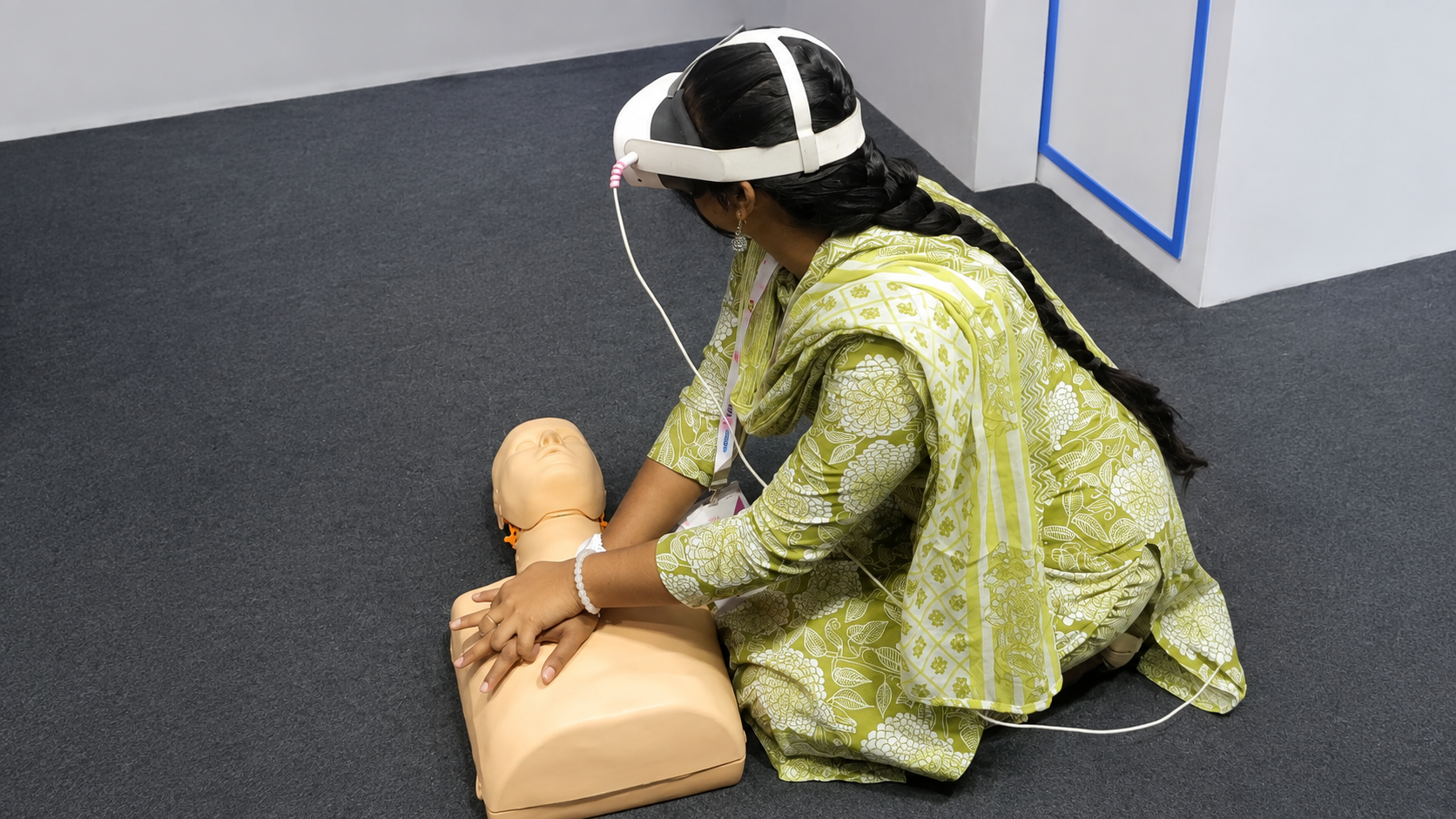
For training institutions, this can make practice more engaging and contextual. Learners can experience different scenarios, repeat them and learn from their performance without the risks associated with practising on a real patient.
Technology such as RescueSim XR can bring together the physical response of a smart manikin with a virtual environment, creating a more complete simulation experience.
The aim is simple: make practice closer to the situations learners may actually face.
Making Classroom CPR Training More Connected
CPR training often involves multiple learners practising at the same time, which can make it difficult for instructors to monitor every compression and provide individual feedback.
RescueSim Lite addresses this by connecting smart CPR manikins with a desktop application, allowing instructors to bring hands-on practice and digital performance information into the same training environment.
With multiple manikins connected, instructors can monitor learner performance during classroom sessions rather than relying entirely on manual observation. This can make practice more structured while giving learners a clearer understanding of their CPR technique.
The value of a connected system is not simply having more technology in the classroom. It is about making hands-on CPR practice easier to monitor, review and improve.
The Instructor Still Matters
As CPR training equipment becomes smarter, the role of the instructor does not become less important. If anything, better training data can give instructors more information to work with.
Technology can show where a learner may be struggling, but an instructor provides the explanation, correction and guidance needed to improve. They understand the learner's context and can decide what needs more practice.
The best training technology should therefore support instructors, not replace them. The manikin provides the practice, the system provides useful information, and the instructor turns that information into better learning.
The Future of the CPR Manikin
The CPR manikin is moving beyond its traditional role as a physical model for practising compressions. Connected technology, performance feedback and simulation are giving it a more active role within healthcare training.
The next generation of CPR equipment will likely be judged not only by how realistic it feels, but by how effectively it supports practice, feedback, measurement and learning. Whether through connected systems such as RescueSim Lite or immersive solutions such as RescueSim XR, the direction is clear: CPR training equipment is becoming part of a larger digital training environment.
The manikin is no longer just where CPR is practised. It can become part of how training is understood, improved and evaluated.
Conclusion
The CPR manikin has come a long way from being a simple model used to practise chest compressions. Modern healthcare training demands equipment that can provide meaningful feedback, support instructors and connect hands-on practice with a wider learning experience.
The goal is not technology for its own sake. It is about making training more useful, measurable and relevant to the situations learners may eventually face. As CPR education continues to evolve, the question is no longer simply whether a manikin can simulate a chest.
It is whether the training system around it can help people practise better, learn from their performance and prepare for the moment when the skill truly matters.
Ready to move beyond traditional CPR practice? Explore how RescueSim Lite and RescueSim XR by allreal can bring connected technology, measurable performance and immersive simulation into healthcare training.